
Remembering 2011 Inductee Donald V. Barnett
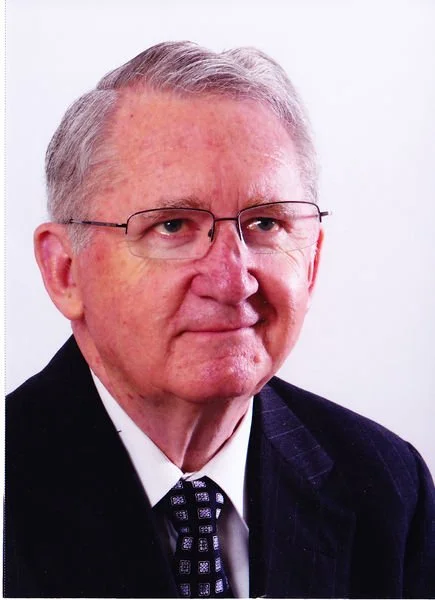
The South Dakota Hall of Fame extends our heartfelt condolences to the family and friends of 2011 Inductee Donald V. Barnett, who passed away on January 12, 2026.
As a member of the South Dakota Hall of Fame, Don Barnett was a visionary public servant whose steady leadership guided Rapid City through some of the most challenging and defining moments in its history.
Don Barnett grew up in Rapid City’s “Gap,” the area between downtown and the west side where the city meets the Black Hills. A graduate of South Dakota State University in 1964, Barnett’s early life reflected perseverance and determination. As a young man, he overcame a severe stuttering challenge through the encouragement of devoted teachers and participation in school forensics. He also earned the rank of Eagle Scout, setting an early example of discipline, leadership, and service.
Barnett’s commitment to service extended to his country. While a graduate student at the University of Nebraska, he sought and received a Direct Commission in the United States Army in 1967, entering military service during the height of the Vietnam War. After training as a Medical Service Corps officer, he was called to duty in Washington, D.C., during the unrest following the assassination of Rev. Martin Luther King Jr. He later served as Commander of a 240-man medical company in Vietnam, working as a senior administrator at a neurosurgical and spinal wound hospital. For his meritorious service, he was awarded the Bronze Star Medal and was honorably discharged in 1969 with the rank of Captain.
Returning home, Barnett sensed a growing defeatism within his hometown. Determined to challenge the belief that progress was out of reach, he launched a mayoral campaign that many initially dismissed. At just 29 years old, he became the youngest mayor in Rapid City’s history, bringing with him optimism, energy, and a belief in the city’s potential.
A long-promised civic center quickly became central to his vision. Barnett believed the project could serve as both an economic catalyst and a cultural anchor for the community. Through persistence, collaboration with the city council, and extensive community engagement, the effort succeeded. Voters approved the measure by a decisive margin, signaling a renewed confidence in the city’s future.
Just two months later, that confidence was tested in unimaginable ways. On June 9, 1972, a catastrophic flood along Rapid Creek claimed 238 lives and devastated hundreds of homes and businesses. Mayor Barnett faced an immediate and overwhelming test of leadership. Working alongside city officials, municipal employees, and residents, he helped guide Rapid City through emergency response, restoration of essential services, and long-term recovery. Given a brief national platform on NBC’s Today Show, Barnett used the moment not only to speak about the disaster but also to encourage travelers to continue visiting Rapid City, the Black Hills, and Mount Rushmore, recognizing tourism as essential to the region’s recovery.
In the months that followed, Barnett presided over a series of unanimous city council decisions that reshaped Rapid City’s approach to floodplain management, safety, and long-term planning. His leadership emphasized cooperation, foresight, and responsibility to future generations.
The challenges of his tenure did not end there. In early 1973, Rapid City became the first medium-sized western city to confront organized civil disobedience when the American Indian Movement came to town. During one of the most difficult periods of his life, Barnett worked to mediate tensions, prevent violence, and preserve the city’s stability and reputation. His calm resolve and compassionate leadership helped avert bloodshed and lasting division during an extraordinarily volatile moment.
Don Barnett’s four years as mayor unfolded during a period of historic upheaval and transformation. His ability to lead with integrity, courage, and optimism left a lasting imprint on Rapid City and on South Dakota as a whole. It is for this extraordinary service, in times of crisis and change, that Don Barnett was inducted into the South Dakota Hall of Fame.
His legacy endures in the community he helped shape, the challenges he met with resolve, and the example he set for future generations of public servants.